Family Betrayal: Your Father the Bystander
When a child calls out harm, a dysfunctional family system often fails to protect the child.
This is the typical story about abuse in families: A father abuses his children and/or his wife in front of the children. The mother is criticized for failing to protect the kids. The father (might) be investigated, charged, or face consequences. The mother, even when she is terrified, financially trapped, or being abused herself, is held accountable in courtrooms and in the cultural conversation for failing to stop him.
There is another story that almost no one tells: A mother abuses her children while the father stands by and does nothing. The father is rarely investigated, rarely blamed, and rarely held responsible for what he watched happen and chose not to stop. If this is your story, it is because the systems built to recognize child harm were never designed to see a man as the parent who failed to protect.
Why Fathers Stand By
There are endless reasons why one parent might sit back while the other abuses the children. Your father may have depended on your mother in ways that, to him, felt impossible to disrupt. While we normally associate financial and emotional dependency with women, more and more men are married to women who are the primary earners in the home. He may also have built an identity as a “happily married” man, and acknowledging what she was doing to you would have shattered that identity or his standing within his community.
Many fathers were not raised to view emotional caregiving, supervision, or protection of children as their primary domain. When the home became unsafe, your father may have believed he was not responsible for the “parenting.” He saw himself as a protector against outside danger, like an intruder, but he was not supposed to protect you from your mother. He may have also been a victim of your mother’s abuse, and confronting how she was treating the children would force him to recognize his role as her victim. Many men are resistant to identifying as victims of a woman’s abuse. They will avoid identifying her behavior as such to maintain their position as her equal or even as her superior.
While the reasons parents and abuse victims stay are complicated, nuanced, and individualized, this article will focus on your experience as a child with an enabling or bystander father and not his unique reasons for being unable to leave. None of this is a defense of bystander fathers. You can explain their behavior and still be harmed by it. And you can develop empathy and understanding for his circumstances (if that is part of your process) only after the child in you has felt protected and understood. Understanding why can help you stop blaming yourself for his lack of protection. We will discuss what comes after family betrayal and how you move forward when the family system that was supposed to keep you safe didn’t.
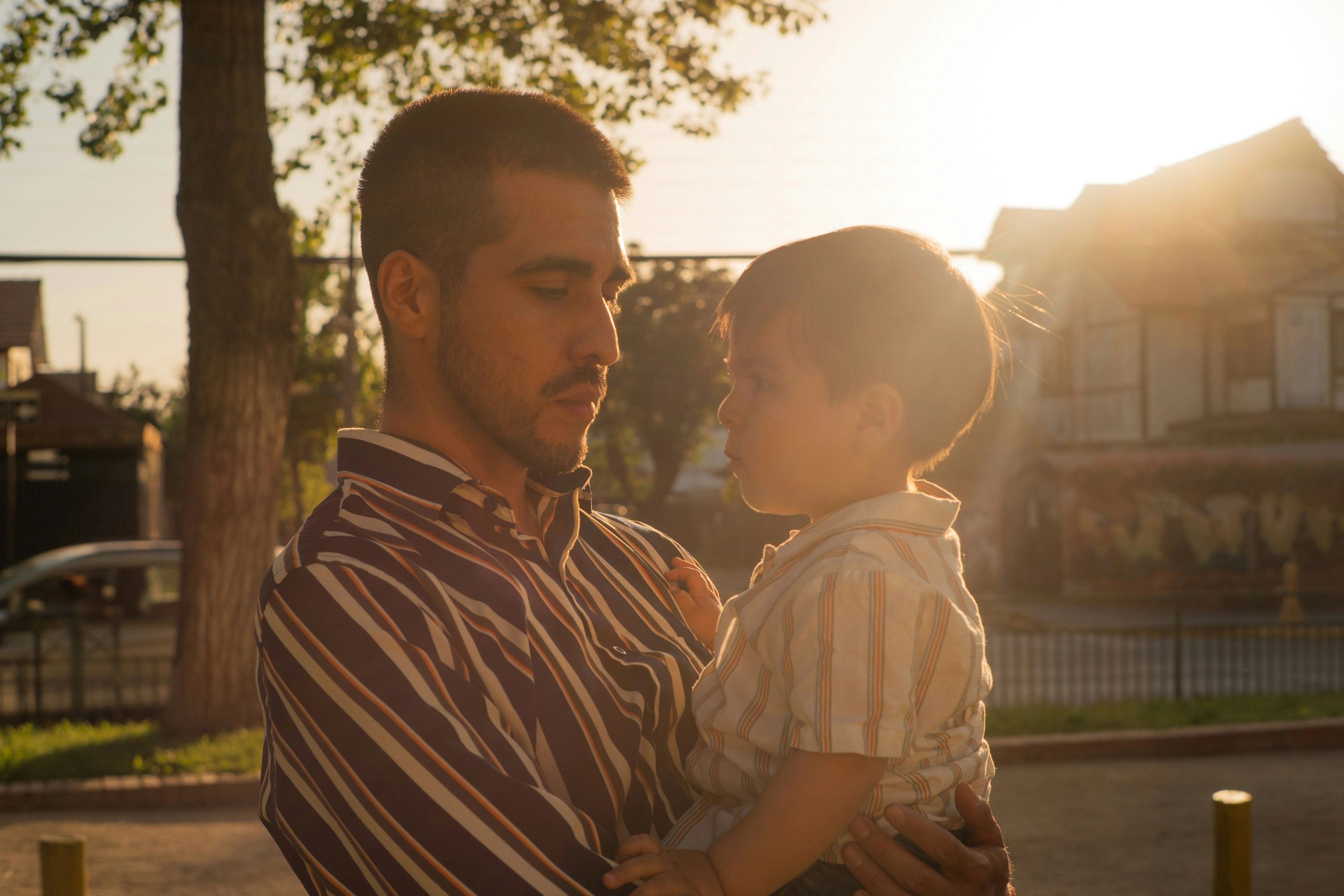
The Asymmetry of Blame
There is a particular type of betrayal that occurs when the parent who could have intervened chooses, instead, to look the other way. When researchers examined child welfare interventions, they noticed something striking. While most children who interact with child welfare agencies have a living father, men are often absent from those investigations. Investigations into child neglect focus almost exclusively on mothers' behavior and responsibilities. This is true even when fathers are present and involved (Strega et al.). And in the United States, where the legal concept of “failure to protect” is applied in cases of child maltreatment, researchers found that men are rarely prosecuted for failing to protect their children from an abusive mother.
A father can leave his children without automatically being accused of abandoning them. The cultural script assumes that caring for the children was not primarily his responsibility in the first place. And if he does provide financially, he is often given a pass for other transgressions, like not being an active, present parent. When children are sexually abused, what the mother did not do is often treated as more serious and more blameworthy than what the father, or another man, actually did. Her refusal to protect is treated as the primary crime.
The idea that the mother would be the perpetrator and the father the bystander or enabler seems so far-fetched for some that this topic is rarely discussed. However, when asked, members of Calling Home overwhelmingly reported that they wanted to address an “enabling father” who “watched their mother’s abuse and did nothing” this month. Clearly, there is an institutional and cultural belief that fathers are not expected to protect their children from abuse, even when they are bystanders. And the reverse configuration, with the mother as the danger and the father as the bystander, is so rare that it’s not worthy of our attention. However, families who experienced this tell us a different story.
The Unique Pain of The Bystander Father
You may have spent years not having language for what happened in your home. You know your father saw what was happening. He was in the room when you were being abused or treated poorly. Or you asked him for help and received a shrug, a redirect, or the suggestion that you just stop upsetting your mother.
Many adult survivors realize how much the bystander parent impacted them in adulthood after they have some separation from the parent and have found physical and emotional safety. They may even be more upset with their bystander father than the mother who was carrying out the abuse. It is painful and overwhelming to realize that the parent who could have stepped in and helped you when you were a vulnerable child chose not to. Instead, they taught you to manage your reaction to the abuse and how visible the situation became to anyone outside the house. When you have this realization about your bystander parent, you are also facing the reality that both of your parents participated in your harm.
The offending parent did the harming. Why is the bystander the one who feels harder to forgive?
The offending parent clearly showed you who they were, and their abuse was more obvious. If you tell someone that your mother threw things at your head, hit you, or relentlessly screamed in your face, they are likely going to label that as “abuse.” The bystander parent showed you that, even when another adult could have helped, they chose not to.
Family Betrayal Allows Abuse to Continue
The psychologist Jennifer Freyd developed betrayal trauma theory, which describes what happens when the person harming you is also the person you depend on for safety, security, or love. Children, and the adults around them, often develop what Freyd calls “betrayal blindness.” This allows the relationship to continue when confrontation or withdrawal would be too costly. In children, betrayal blindness maintains the attachment system. In a bystander parent, betrayal blindness keeps the marriage, income, social standing, and family story intact.
When one parent is dysregulated, abusive, or unwell, the rest of the family unconsciously adjusts to keep the system functioning. The bystander parent often becomes the one who manages the children’s reactions to the offending parent, who minimizes the harm, and tells them things like “just do not upset your mother.” Your father was working within the system to protect the status quo under the guise of “stability” for the family, but unfortunately, that only leads to more dysfunction.
This is the part of the wound that adult survivors rarely have language for. The abuse itself often gets named eventually, maybe when a therapist or trusted person points out that what happened to you was not ok. But the betrayal of the bystander parent and the family system around them often does not get called out, and they continue to protect themselves even after the abuse has been validated.
No family system wants to admit that they allowed abuse to happen. They will do almost anything, including continuing to victimize children, to solidify their falsely constructed reality that “that doesn’t happen in our family.” And when you realize this is what is happening, it can be completely destabilizing. It won’t feel this way forever, and there is hope.
What This Does To You
Research on family betrayal shows that among young adults who were abused as children, the majority reported a history of family actions or inactions that enabled or perpetuated the abuse. Experiencing family betrayal predicted clinically significant posttraumatic stress symptoms above and beyond the abuse itself. When researchers controlled for the abuse, the recent victimization, and other variables, family betrayal was, on its own, the single strongest predictor of ongoing posttraumatic stress. This means that when the family continues to hide that abuse is happening, deny, and enable the abuser, it causes even more harm to the victim than the abuse they endured.
As a result of both the family betrayal and the abuse:
- You may struggle to ask for help because help never came.
- You may feel that no one truly has your back, because the person who should have did not.
- You may find yourself in adult relationships with partners who freeze when you need them.
- You may doubt your own memories.
- You may feel guilty for being angry at the bystander parent who, technically, was “not the worst one.”
- You struggle to trust that anyone will respond when you need them.
- You sometimes dissociate in moments of stress.
- You may feel intense loneliness.
Moving Forward
Your father did not stand by because there was something wrong with you. He stood by because the family was structured to absorb your mother’s behavior and pass the cost of absorbing it to whoever had the least power in the room. That is typically the child.
When a child calls out harm, a dysfunctional family system often fails to protect the child. It responds by protecting the status quo. This is especially true in families where one parent is harming, and the other is benefiting from the arrangement staying intact.
Moving forward does not look like getting your father to finally understand what he did. It may not happen. Many bystander parents go to the grave still committed to the version of the story where nothing was really wrong. Waiting for him to see you is, in its own way, a continuation of being alone in the room where you were harmed, and he did nothing.
Moving forward can include naming what your father witnessed and what he chose not to do about it. You may choose to have a relationship. You may choose distance. You may choose estrangement. All of these are valid responses to what happened. The work in front of you is not to fix the family that failed to protect you. The work is to stop betraying yourself. You were not too much. You were not unworthy of attention. You were a child in a system that was surviving at your expense. Now you are an adult who gets to choose differently.
Sources and further reading
Freyd, J. J. Betrayal Trauma Theory (Freyd Dynamics Lab, University of Oregon).