The Scapegoat Has an Unmet Need
How a child’s unmet needs become proof they’re the problem, and how that label hardens into the scapegoat role.
Joshua is the second child. He has an older sister who loves school and excels academically. When he was born, his parents were going through bankruptcy and had to shut down their business.
He wasn't "planned" and his birth added more stress to an already stressful situation. Joshua wasn't a great sleeper as a baby, and his parents were frustrated by his constant need for comfort.

Joshua is in fifth grade. He has trouble sitting still in class and is getting in trouble often. His parents are constantly annoyed.
Every time Joshua's class is reading, he causes some type of chaos. He knocks over his chair on purpose. He asks to go to the bathroom over and over. He says he's sick. He makes a joke to distract the teacher. He seems like he is actively trying to get kicked out of class.
His teacher is frustrated and brings the issues up to his parents. Joshua's parents say he has always been a problem. "Since the day he was born, he has been difficult." They are not open to any other explanations for his behavior. They're going to enforce "consequences" and make sure he "acts right."
When Joshua has a rough day at school, they threaten him and punish him. They tell him how much stress he is causing the family. They compare him to his sister, who never gets in trouble at school.
Joshua continues to struggle in school. He absolutely hates reading. As a teenager, he starts skipping school and never turns in his homework. His parents are getting divorced, and he is still the problem. They blame him, "Your dad and I were always fighting about you. If you would just get it together, this wouldn't happen."
As an adult, Joshua learns that he has dyslexia. His entire life, he struggled with reading. He tried to escape any situation that made him feel incompetent or stupid. He escaped by skipping school, never doing his homework, and finding ways to get kicked out of class.
Like many family scapegoats, Joshua was born into a stressful situation. Rather than looking at the problem, he became the problem. His unmet needs became more evidence that he was in fact the problem.
Maybe you can relate to Joshua. You were the difficult one, the moody one, the one who struggled in school or couldn't sit still or cried too easily. And some of that may have been true. Most kids struggle with something. But, how much of your “problems” were just the consequence of an unmet need?
This article looks at how your struggles and unmet needs became evidence that you were the problem and then solidified into your identity as the family scapegoat.
Your Struggle Becomes the Family Problem
Some children are harder to parent than others. A child may be more intense, more sensitive, louder, quieter, slower to warm up, or quicker to get upset. A large study of Canadian families found that "children's temperament was associated with parental negativity and differential negativity," meaning parents were more negative with some kids than with their siblings based partly on temperament.
The same study found that differential negativity was highest in families where the marriage was unhappy and in single-parent families. A child with a harder temperament is more likely to end up being treated poorly by a stressed parent. Temperament researchers also look at goodness of fit and the impact on the parent-child dyad. Children tend to do well when their environment and the family’s expectations of them match who they actually are. They struggle when it doesn't match up. A sensitive child is not a problem in a calm, patient home. In a chaotic one, that same sensitivity often gets treated as the cause of the chaos.
Scapegoating is often less about what is actually wrong with a child and more about what is easy to point at. Every child struggles with something, and in most families those struggles are treated like ordinary phases or challenges. In a family that needs a problem, they become proof. The struggle is constantly pointed out, talked about, compared, and brought up again years later. Each new sign gets added to the case against the struggling child.
Part of this has to do with what the parent is going through. In one study, depressed mothers of young children were more critical of their kids than non-depressed mothers, even though "the behavior of children of depressed and non-depressed mothers showed no significant differences" when researchers observed them. In another study, mothers' depression was a better predictor of how they saw their child than the child's actual observed behavior. Researchers still debate how much this is bias and how much is accuracy, and it is not true of every struggling parent. But it is clear that a parent's own state shapes what they see when they look at a child.
What a parent believes about a child can also shape who that child becomes. A long-running study of mothers' hostile attributions, meaning a tendency to assume a child is misbehaving on purpose, found that those beliefs "predicted children's future externalizing behavior problems at school," largely because those mothers used harsher discipline. Research on parents' expectations has found something similar. When parents held inaccurate negative beliefs about their teenager, those beliefs added up over time and pulled the teen's behavior in the direction the parents expected. The effects grew year after year.
In a three-year study of 385 families, parents' beliefs that one child was better behaved than the other predicted more conflict between parents and the child being seen as worse. For siblings close in age, mothers' comparisons predicted problem behavior two years later. A 2024 analysis of 19 studies found that siblings who received more hostility from their parents than their brothers or sisters had more behavior problems. Being compared is painful, and it changes how a child behaves.
Something I hear often in the Calling Home groups is that a family took one child to doctor after doctor, therapist after therapist, specialist after specialist, while the rest of the family never went. Each appointment confirmed that this child was the one with the problem. Sometimes the child really did need help, and the help they got was aimed at the wrong thing. The family's stress, the marriage, or a parent's own struggles never came up. Sometimes the family sincerely believes the child is the problem, and they are looking for professionals to agree.
When the "Problem" is an Unmet Need
A lot of what gets labeled as bad behavior or a difficult personality in a child is actually a need that isn't being met. Sometimes that need is emotional. Very often it is physical, medical, or structural.
Sleep
In one experiment, researchers changed the bedtimes of healthy 7 to 11-year-olds for five nights. Teachers who didn't know which kids were in which group rated their behavior. About 27 extra minutes of sleep a night led to "significant improvement in alertness and emotional regulation," and about 54 fewer minutes had "opposite effects." Children with sleep apnea who had their tonsils and adenoids removed improved more in restlessness, impulsiveness, and emotional ups and downs than children who waited. A child who isn't sleeping well can look a lot like a child with a behavior problem.
Hearing and Vision
A review of 33 studies found that children with hearing loss scored about a quarter to a third of a standard deviation higher on emotional and behavioral difficulties than hearing children. Vision is less clear in the research, but a child who can't see the board or read the page without strain is going to struggle in school, and that struggle can easily get interpreted as laziness or defiance.
Food and Nutrition
In a study of nearly 3,000 families with three-year-olds, behavior problems were much more common in food-insecure homes (about 37 percent) than in food-secure ones (about 23 percent), even after accounting for income. Infants given iron supplements in one long-term trial were rated as more cooperative and confident at age 10 than infants who weren't. These effects were small, but a hungry or undernourished child is not a calm child.
Chaos in the Home
A review of 112 studies found "consistent evidence for associations between household chaos and a number of adverse child, parent, and family-level outcomes." Noise, crowding, no routines, and no predictable bedtime or mealtime can all cause household chaos. Children in chaotic homes often have more behavior problems, and the child who reacts most visibly to the chaos is often the one who gets blamed for it.
Neurodivergence
Girls with autism are at "disproportionate risk of not receiving a clinical diagnosis," according to a large review, and girls with ADHD tend to be diagnosed later than boys. Many members of the Calling Home community report being diagnosed with ADHD or autism as adults. Looking back, they can see that what their family called rude, lazy, dramatic, or too much was a brain that worked differently and needed different support.
This does not mean that every scapegoat had an undiagnosed condition. But, when a family decides a child's behavior is about their character, it often stops them from looking for anything else.
How the Cycle Continues
When a child's needs go unmet, the child usually gets harder to manage. When the child gets harder to manage, the parent gets more stressed and more critical. When the parent gets more critical, the child struggles more. This is one of the most studied patterns in child development.
Psychologist Gerald Patterson called it a coercive family process. Researchers describe one version of it like this: a parent intrudes; the child responds coercively (e.g., whining, tantrums). The parent, in turn, becomes frustrated." Those small moments repeat thousands of times, and over the years they shape both the child and the relationship.
It also works in the other direction. In a 1979 study, when hyperactive boys were given medication for their symptoms, they "were more compliant with maternal commands," and in response their mothers "displayed increased attention to compliance while reducing their directiveness toward the boys." When the child's needs were met, the parent's behavior changed too. Parents of children with autism or developmental delays report some of the highest levels of parenting stress, and across 133 studies, parenting stress was strongly linked with children's behavior problems.
Money stress feeds the cycle as well. A long-running study of rural families found that "economic pressure experienced by parents increases parental dysphoria and marital conflict as well as conflicts between parents and children," which led to more hostility between parents and kids.
So a child who isn't sleeping, can't hear well, is hungry, lives in chaos, or has an undiagnosed brain difference often gets harder to live with. A stressed parent without the resources, knowledge, or support to figure out what is going on may incorrectly conclude the child is the problem. The child gets treated like the problem and struggles more. The struggles become more evidence. This repeats over time, and the child then integrates that they are the problem as a core part of their identity.
There Doesn’t Have to be a Villain
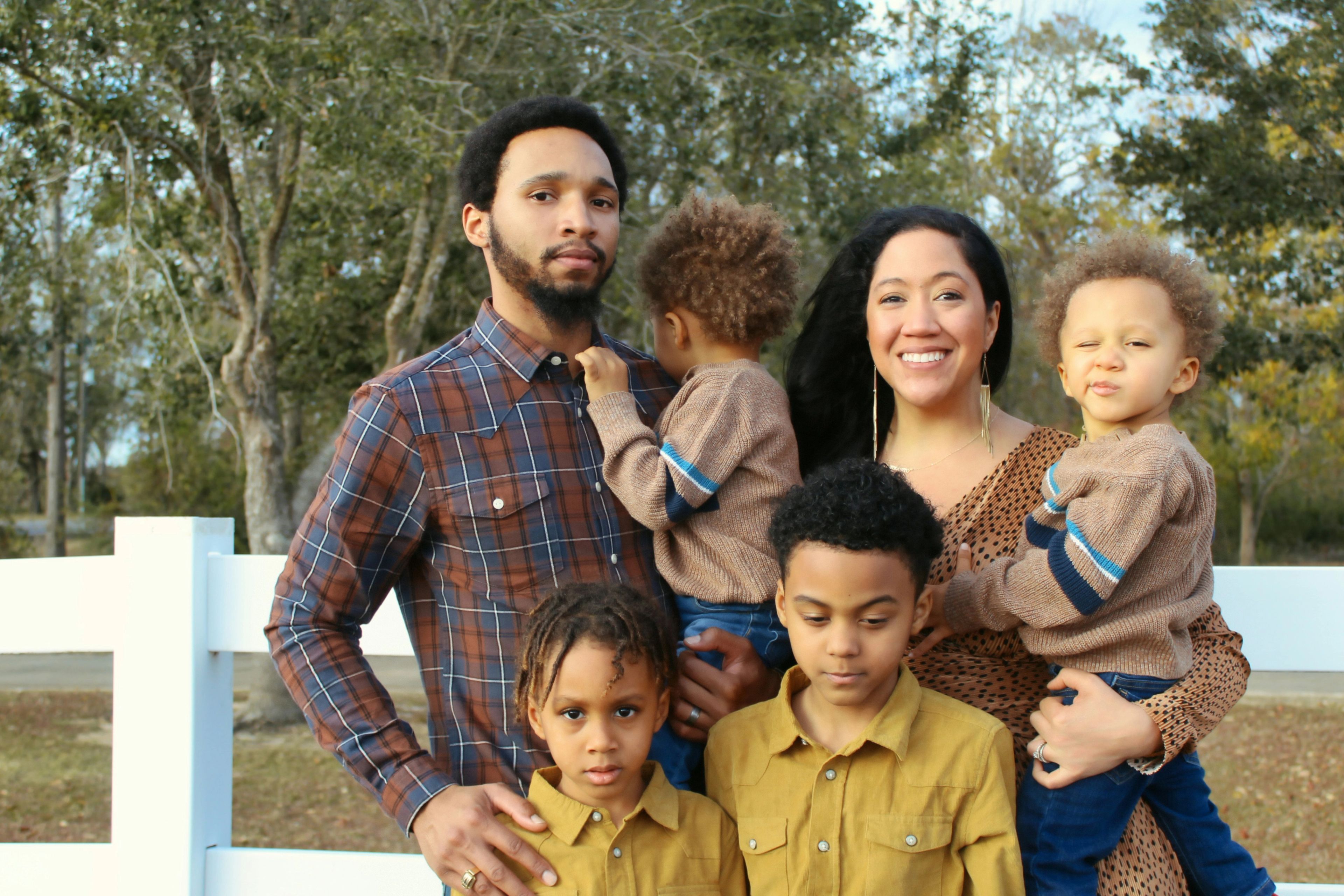
Many parents of scapegoats didn't know what their child needed or didn't have the means to get it. Some were depressed, struggling financially, overwhelmed, in bad marriages, or carrying burdens from their own childhoods. Many were just doing what they had seen done. Understanding the cycle allows us to understand how a family under strain can end up blaming a child without anyone actively deciding to.
You were a kid with needs, in a family that couldn't or didn't meet them, and your struggles got turned into your identity. You deserved to have someone ask what you were experiencing instead of just deciding what was wrong with you. That is true whether your parents meant harm or not. Looking back at your childhood through this lens can bring up a lot of complicated feelings. You might feel relieved because it wasn't your character that put you in this role. You might feel anger because if someone had just noticed and done something, things would be different. You might experience grief and empathy for the version of you that never got the help.
Many adults who grew up as the scapegoat are still carrying the unmet need underneath the label. If you were called lazy, disorganized, dramatic, or too sensitive your whole life, it may be worth asking whether something was never evaluated. An adult evaluation does not fix the past, but it often changes how you understand it.
This week's worksheet walks you through the struggles your family focused on, what might have been underneath them, and what the role did for everyone else. Bring what comes up to the Wednesday group on October 14, and we will discuss it.