Becoming Your Own Good Mother
If your mother was neglectful, there is a good chance you learned to ignore your own physical needs.
After you have named what happened, traced the impact it left, and started to grieve the mother you needed but did not have, a new question will come up in the present: “If she couldn’t give me what I needed, how do I give it to myself?”
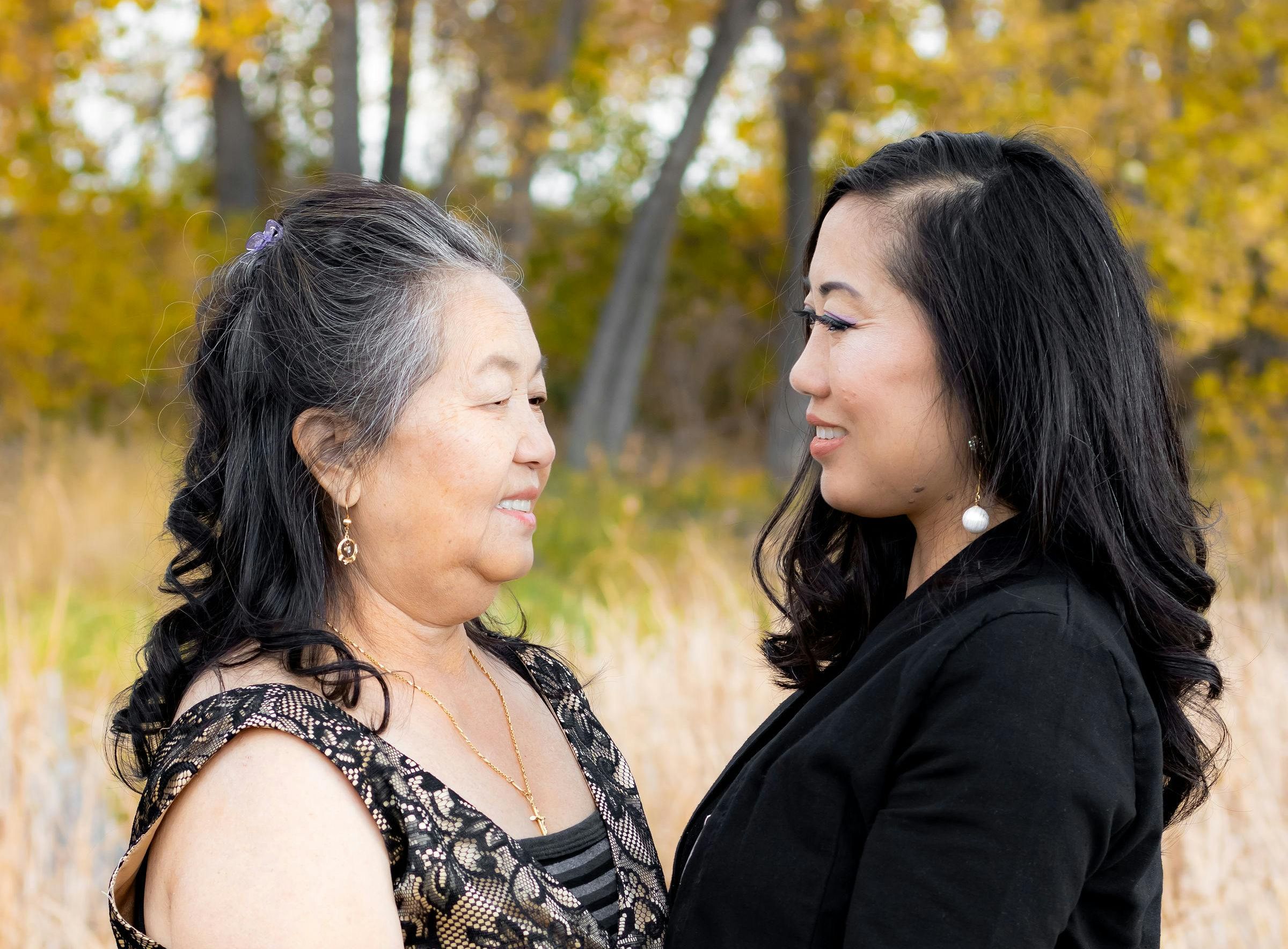
This is re-parenting: the practice of learning to meet your own needs with the care, consistency, and honesty that were missing in your childhood. It is not a one-time realization or a single breakthrough moment. It’s an everyday thing. A decision, made over and over again, to treat yourself the way a good mother would have treated you, even when you don’t feel like you deserve it, especially when you don’t feel like you deserve it.
Taking Care of Your Physical Needs
If your mother was neglectful, there is a good chance you learned to ignore your own physical needs. You push through exhaustion, skip meals because you forget to eat, don’t go to the doctor when something hurts, and treat your body the way she treated you.
Re-parenting your body means consciously and repeatedly choosing to care for it the way someone who loved you would. It means eating when you are hungry instead of waiting until you are depleted, and resting when you are tired instead of pushing through. It means going to the appointment, buying the thing that makes you comfortable, and letting yourself take up physical space without apologizing for it. These are not luxuries. They are the baseline of care that every person deserves, and if no one taught you that, you get to learn that now.
Changing Your Inner Voice
Many adults who grew up with critical or neglectful mothers have an internal voice that is harsh, impatient, and unforgiving. It is the voice that says “you should have known better,” “what is wrong with you,” and “you’re making a big deal out of nothing.” That voice may sound like yours, but it isn’t. It is the internalized version of how you were spoken to as a child, and it has been running unchecked for a very long time.
Changing your inner voice means learning to speak to yourself the way a kind, steady, honest mother would. Not with toxic positivity or hollow affirmations, but with warmth that tells the truth. “This is hard, and you’re allowed to struggle with it.” “You made a mistake, and that doesn’t make you a bad person.” “You’re doing something difficult, and you’re trying.” It will feel strange at first, maybe even dishonest, because you are not used to hearing it. But the discomfort is not evidence that it isn’t true.
Learning to Set Boundaries
If your mother punished you for having boundaries through guilt, rage, silence, or emotional withdrawal, you probably learned that setting a limit means losing love or attention. That belief makes boundary-setting feel dangerous, even as an adult. You might say yes when you mean no or tolerate behavior that hurts you because the alternative feels worse. You confuse self-sacrifice with closeness because in your family, that is exactly what closeness required.
Re-parenting yourself means learning that boundaries are not a form of punishment or rejection. They are a form of self-care and a sign of love. They are the way you communicate what you need to feel safe. A good mother would not ask you to abandon yourself to keep the peace. She would teach you that your needs matter, that “no” is a complete sentence, and that love does not require you to disappear. If no one taught you that, you are allowed to teach yourself now.
Allowing Yourself to Need Others and Receive Help
One of the most difficult aspects of re-parenting yourself is learning to receive help from others. If your needs were treated as burdens in childhood, you may have built an entire identity around not needing anything from anyone. You are the strong one, the independent one, the person who handles everything alone. And while that self-sufficiency kept you safe when you were young, it stops love, support, and genuine connection from getting in today.
Receiving help, compliments, comfort, or love requires vulnerability. You have to let someone see that you have needs, which is the very thing you were taught to hide. Re-parenting in this area means practicing small acts of receiving without immediately reciprocating, deflecting, or minimizing. You will practice letting someone do something kind for you and sitting with the discomfort of not earning it. It means accepting that needing people is not a weakness. It is what every human being needs and wants, and the fact that it was punished in your home does not make it wrong.
Learning To Be Honest With Yourself, Even When It Is Uncomfortable
A good mother tells you the truth, not to hurt you, but because she respects you enough to be honest. She tells you when you’re avoiding something. She tells you when your behavior is hurting someone. She tells you when you’re settling for less than you deserve. She does it with kindness, but she does not withhold the truth just to keep things comfortable.
Re-parenting yourself means developing this same capacity for honest self-reflection. You will have to learn to ask yourself hard questions like, “Am I staying in this relationship because it’s good for me, or because leaving feels like something I’m not allowed to do?” And how to recognize when you are repeating a pattern you don’t want to repeat. Holding yourself accountable without shaming yourself or engaging in self-hatred is a big part of becoming a loving, accountable adult.
What Healing Looks Like From Here
Healing from maternal neglect does not look the same for everyone, because the circumstances are not the same. Some of you are still in regular contact with your mother, while others have reduced contact or are navigating low contact for the first time. Some of you are estranged. And some of you are grieving a complicated or harmful mother who has died.
In every one of those situations, healing is possible. It does not require her participation, acknowledgment, or apology. It does not require a reconciliation or a final conversation that ties everything up neatly. It just requires your willingness to see the truth, grieve what was lost, stop abandoning yourself like she did, and slowly build a new relationship with yourself. That is what it means to become your own good mother. Not because she failed you, but because you deserve to be mothered well, and you are the person most capable of doing it now.